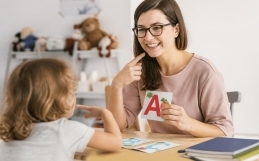
If you're a parent or caregiver of a child with autism, you've probably wondered exactly how speech therapy help autism and whether it's worth the investment. The short answer? Speech therapy can be transformative. It addresses communication challenges, builds social skills, and opens doors to meaningful connections. TL;DR: Speech therapy for autism goes beyond teaching words-it develops both verbal and nonverbal communication, enhances social interaction, and builds confidence through personalized interventions tailored to each child's unique needs.
Let's dive into what makes speech therapy such a powerful tool for children on the autism spectrum.
Understanding Communication Challenges in Autism
Autism spectrum disorder affects communication in diverse ways. Some children may be nonverbal, while others speak fluently but struggle with conversational back-and-forth. You might notice your child has difficulty understanding tone, making eye contact, or interpreting social cues.
These challenges aren't about intelligence. They're about how the brain processes and produces language. According to research on speech therapy for autism, approximately 40% of children with autism are nonverbal or minimally verbal, while others may have echolalia (repeating words or phrases) or difficulty with pragmatic language.
What Speech Therapy Actually Targets
Speech-language pathologists (SLPs) work on several key areas:
- Expressive language: Helping children express wants, needs, and thoughts
- Receptive language: Understanding what others say
- Articulation: Clear pronunciation and speech sounds
- Pragmatic skills: Social language like turn-taking and staying on topic
- Alternative communication: Sign language, picture systems, or devices when needed
Each therapy plan is completely individualized. What works for one child might not work for another, which is why experienced therapists assess each child's specific strengths and challenges.

How Speech Therapy Help Autism Through Evidence-Based Techniques
You're probably curious about what actually happens during therapy sessions. Modern speech therapy for autism uses several evidence-based approaches that have shown remarkable results.
Naturalistic Developmental Behavioral Interventions
These techniques incorporate learning into natural play and daily routines. Instead of drilling flashcards at a table, therapists might work on requesting skills during snack time or practice greetings during arrival.
Studies on naturalistic interventions show significant improvements in language development for minimally verbal children. The key is making communication feel rewarding and functional, not forced.
Augmentative and Alternative Communication (AAC)
Here's something many parents worry about: Will using pictures or devices prevent my child from talking? Research says no. In fact, AAC often boosts verbal language development because it reduces frustration and shows children that communication works.
AAC options include:
- Picture Exchange Communication System (PECS): Trading pictures for desired items
- Speech-generating devices: Tablets or dedicated devices that produce speech
- Sign language: Manual signs adapted for each child's motor abilities
- Visual schedules: Helping children understand routines and transitions
The beautiful thing about AAC is that it meets children where they are while building a bridge to more advanced communication.
Measurable Benefits That Transform Daily Life
So how speech therapy help autism in practical, everyday terms? Let me break down the benefits you'll likely notice.
Communication Improvements
| Area | Before Therapy | After Therapy |
|---|---|---|
| Requesting | Tantrums when needs aren't met | Points, signs, or uses words to ask |
| Social greetings | No acknowledgment of others | Waves, says "hi," or makes eye contact |
| Understanding directions | Confusion and noncompliance | Follows 2-3 step instructions |
| Conversation | One-sided or no interaction | Asks questions and responds appropriately |
These changes don't happen overnight, but consistent therapy creates steady progress. Speech therapy benefits extend far beyond just talking-they improve quality of life across all settings.
Social Skills Development
Children with autism often want to connect with others but don't know how. Speech therapy teaches the "hidden rules" of social interaction that neurotypical children pick up naturally.
Your child might learn:
- How to join a group of playing children
- When to start and end conversations
- How to interpret facial expressions and body language
- Appropriate voice volume for different situations
These skills build confidence. When children can successfully interact with peers, their whole world expands.
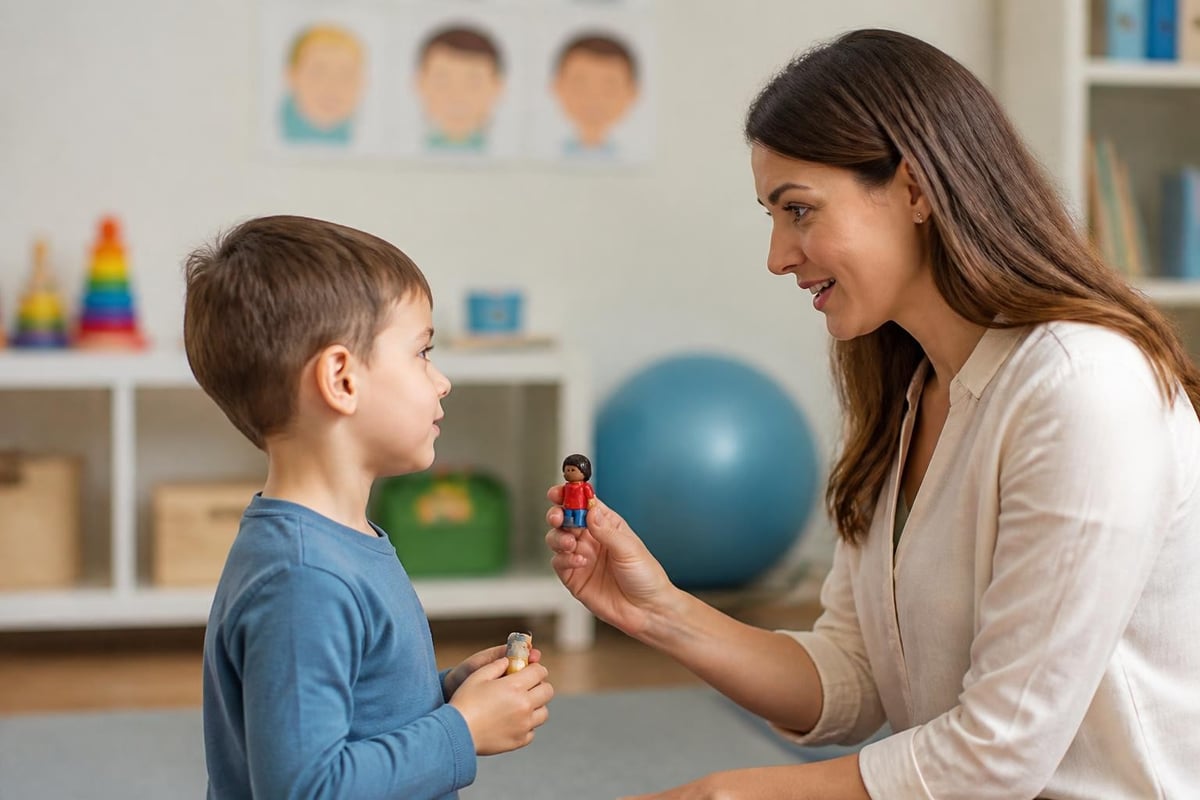
Combining Speech Therapy With Other Interventions
Here's where things get really interesting. Speech therapy doesn't exist in isolation. The most effective treatment plans integrate multiple therapeutic approaches.
Coordinated Care Approach
Behavioral therapy teaches foundational learning skills and reduces challenging behaviors. Occupational therapy addresses sensory needs that might interfere with communication. Physical therapy builds the motor skills needed for speech production.
When these therapies work together, progress accelerates. For example, if occupational therapy helps your child tolerate different textures, they might be more willing to try new foods-which then becomes an opportunity for speech practice during meals.
Some families also explore innovative educational supports. While traditional therapy remains essential, tools like AI-powered tutoring platforms can provide additional practice opportunities in structured learning environments, especially as children reach school age.
Family Training and Home Practice
You're not just dropping your child off at therapy and hoping for magic. Autism Speaks emphasizes that family involvement is crucial for generalization-using new skills beyond the therapy room.
Your SLP should teach you strategies to use throughout the day:
- Modeling language during play
- Creating communication opportunities (like putting favorite toys out of reach)
- Responding to all communication attempts, even imperfect ones
- Building in extra processing time before repeating questions
Think of yourself as a co-therapist. The 30-60 minutes of weekly therapy matters, but the hundreds of small interactions at home matter even more.
Finding the Right Speech Therapist
Not all speech therapists have extensive autism experience. You want someone who understands how speech therapy help autism specifically and stays current with research.
Questions to Ask Potential Therapists
- What percentage of your caseload involves autism?
- Which specific approaches do you use (PECS, social stories, video modeling)?
- How do you measure and share progress?
- Will you train family members on home strategies?
- How often will we review and adjust goals?
Also consider logistics. Early intervention works best, so finding someone with reasonable availability matters. Some practices offer both clinic-based and home-based services, which can make therapy more natural and comfortable.
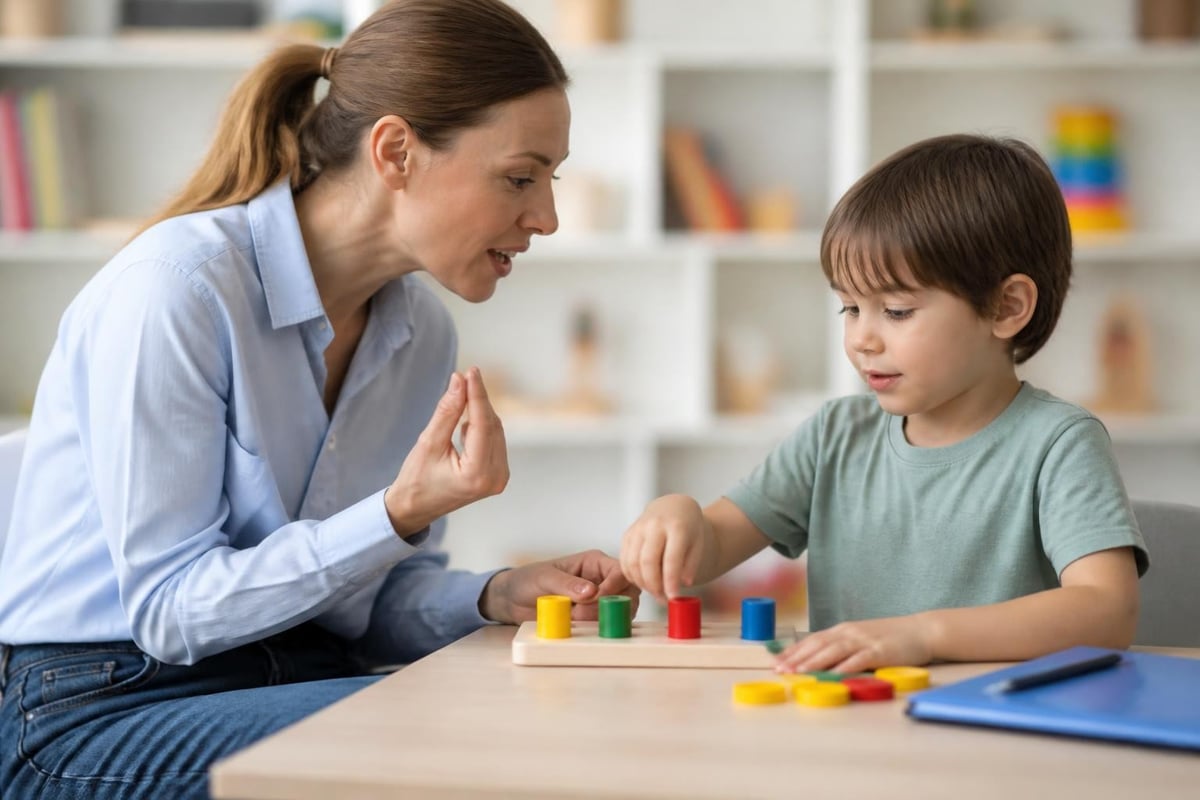
What Progress Actually Looks Like
Let's set realistic expectations. You won't see dramatic changes after one session. But over weeks and months, you'll notice small victories that add up.
Timeline of Typical Progress
Weeks 1-4: Building rapport, completing assessments, establishing baseline skills
Months 2-3: First functional communication (requesting, protesting, greeting)
Months 4-6: Expanding vocabulary, combining words, improving clarity
Months 7-12: More complex sentences, better conversations, increased independence
Every child progresses at their own pace. Some need years of intensive support, while others make rapid gains. What matters is consistent, quality intervention tailored to your child's needs.
According to comprehensive research on speech therapy benefits, children who receive early and consistent therapy show significantly better outcomes in language development, social participation, and academic achievement.
Tracking and Celebrating Success
How do you know if therapy is working? Good therapists use data-driven approaches with measurable goals.
Your therapy plan should include:
- Specific, observable objectives (not vague statements like "improve communication")
- Regular progress monitoring through standardized assessments
- Video recordings to show changes over time
- Functional goals that matter in daily life
Celebrate every milestone, no matter how small. First intentional word. First request without prompting. First conversation with a peer. These moments represent tremendous effort and achievement.
Remember that progress isn't always linear. Some weeks show amazing growth, while others feel stuck. That's completely normal and doesn't mean therapy isn't working.
Speech therapy offers children with autism the gift of connection-with family, peers, and the wider world. Through personalized interventions that address verbal and nonverbal communication, social skills, and functional language, therapy creates pathways to greater independence and quality of life. If you're ready to explore how comprehensive therapeutic services can support your child's unique journey, Hansel Union Consulting, PLLC has provided expert speech therapy and coordinated care across Hampton Roads and Virginia since 2010, helping families transform communication challenges into strengths.