
Have you ever wondered if your child's speech development is on track, or if those mispronounced words are just "cute" quirks that will disappear over time? You're not alone. Many parents struggle to determine when speech therapy is needed, and waiting too long can mean missing critical windows for intervention. TL;DR: Speech therapy becomes necessary when children show delays in articulation, language comprehension, or social communication compared to developmental milestones. Early recognition and intervention significantly improve outcomes for children with speech and language challenges.
The good news? Recognizing the signs early and seeking professional support can make an enormous difference in your child's communication journey and overall quality of life.
Understanding Speech and Language Development Milestones
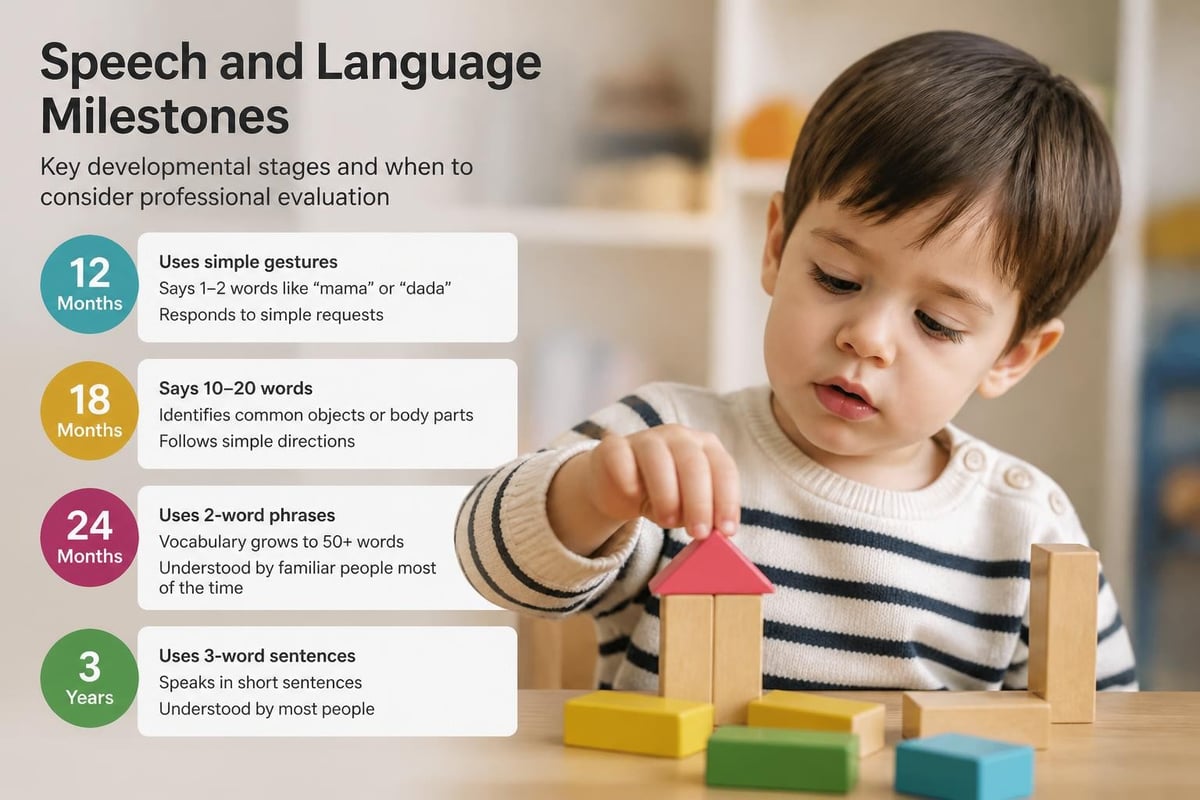
Children develop communication skills at different rates, but there are established benchmarks that help identify when something might need attention. By 12 months, most babies should be babbling and using gestures like pointing or waving. Around 18 months, they typically say their first words, and by age two, they're usually combining two words together.
But what happens when your child doesn't hit these markers?
Understanding typical speech development milestones helps parents and caregivers recognize potential delays before they become more significant challenges. The reality is that every child develops uniquely, but consistent patterns of delay warrant professional evaluation.
Age-Specific Warning Signs
Different ages present different red flags. Here's what to watch for:
12-18 Months:
- Limited or no babbling
- Doesn't respond to their name
- No attempts at gestures or communication
- Absence of simple words like "mama" or "dada"
18-24 Months:
- Vocabulary of fewer than 10 words
- Doesn't point to objects or pictures
- Can't follow simple directions
- Relies heavily on gestures instead of words
2-3 Years:
- Strangers can't understand their speech
- Doesn't combine two words
- Limited interest in interacting with others
- Significant frustration when trying to communicate
Common Conditions That Signal the Need for Intervention
When speech therapy is needed often depends on underlying conditions or challenges that affect communication. These aren't always obvious, which is why professional evaluation becomes so important.
| Condition | Key Indicators | Typical Age Range |
|---|---|---|
| Articulation Disorders | Consistent sound substitutions or omissions | 3+ years |
| Language Delays | Limited vocabulary, difficulty forming sentences | 18 months+ |
| Stuttering | Repetitions, prolongations, or blocks in speech flow | 3-4 years |
| Apraxia | Inconsistent errors, difficulty coordinating speech movements | 2+ years |
| Autism Spectrum | Challenges with social communication, repetitive language | 18 months+ |
Children with developmental, intellectual, or neurological disabilities often benefit significantly from early speech therapy intervention. Research shows that early support can dramatically improve communication outcomes and reduce frustration for both children and families.
Behavioral and Social Communication Red Flags
Speech therapy isn't just about pronouncing words correctly. It's also about how children use language in social contexts and how communication challenges affect their behavior.
Does your child struggle to take turns in conversation? Do they have difficulty understanding jokes or figurative language? These social communication challenges often indicate when speech therapy is needed, even if the child can articulate words clearly.
Behavior Patterns to Monitor
Watch for these behavioral signs that often accompany speech and language difficulties:
- Extreme frustration when trying to express needs
- Avoiding social interactions with peers
- Tantrums that seem communication-related
- Withdrawing from activities requiring verbal participation
- Aggressive behaviors stemming from inability to express feelings
Many parents don't realize that identifying these signs early can prevent secondary behavioral issues from developing. When children can't communicate effectively, they often act out their frustration in other ways.
For families navigating learning challenges alongside speech concerns, tools like Sam&Me can provide additional educational support, helping children progress at their own pace while building confidence in their abilities.

Physical and Medical Factors
Sometimes the question of when speech therapy is needed connects to physical or medical conditions that directly impact speech production. These require specialized attention and often multidisciplinary approaches.
Physical factors include:
- Hearing loss or auditory processing disorders
- Cleft palate or other oral-facial abnormalities
- Tongue-tie (ankyloglossia) restricting movement
- Neurological conditions affecting muscle control
- Chronic ear infections impacting hearing
If your child has experienced frequent ear infections, had tubes placed, or has any diagnosed medical condition affecting their head, neck, or neurological system, consulting with a speech therapist becomes especially important. These physical challenges don't automatically resolve without intervention.
The Importance of Comprehensive Assessment
Medical professionals emphasize that comprehensive evaluation considers multiple factors simultaneously. A qualified speech-language pathologist will assess articulation, language comprehension, expression, social communication, and oral-motor skills to create a complete picture of your child's needs.
Taking Action: What Happens Next?
Once you've recognized the signs, what should you do? The process of getting help doesn't have to be overwhelming, and knowing what to expect can ease anxiety for both you and your child.
Steps to take:
- Document your observations – Keep notes about specific concerns and examples
- Talk to your pediatrician – They can provide initial screening and referrals
- Request a formal evaluation – Speech-language pathologists conduct comprehensive assessments
- Explore insurance coverage – Many plans cover speech therapy services
- Prepare emergency supplies – Having first aid supplies from Medical Gear Outfitters ensures you're ready for any medical situation during therapy sessions
Current research on intervention timing consistently shows that earlier is better. The brain's neuroplasticity is greatest in early childhood, making intervention more effective when started young.

Understanding Your Options in Virginia
If you're in the Hampton Roads area or elsewhere in Virginia, you have access to comprehensive therapeutic services that address speech and language needs within a broader developmental context. The key is finding providers who understand that communication doesn't exist in isolation-it connects to cognitive development, social skills, and overall quality of life.
When evaluating providers, consider:
| Factor | Why It Matters |
|---|---|
| Experience with specific conditions | Specialized knowledge improves outcomes |
| Comprehensive service offerings | Addresses multiple developmental needs |
| Family-centered approach | Involves caregivers in the therapy process |
| Evidence-based practices | Ensures effective, research-supported methods |
| Location and accessibility | Makes consistent attendance feasible |
Many families benefit from providers who offer multiple therapeutic services under one roof, creating continuity of care and reducing the stress of coordinating appointments across different locations.
The Role of Family in Speech Therapy Success
Here's something crucial that often gets overlooked: your involvement matters tremendously. Speech therapy doesn't just happen during appointments-it extends into daily life, and the strategies you use at home significantly impact progress.
Think about it this way: your child spends maybe an hour per week with a therapist but countless waking hours with you. When you implement therapeutic strategies during everyday activities like meals, playtime, and bedtime routines, you multiply the effectiveness of formal therapy sessions.
Home practice strategies:
- Narrate daily activities to build vocabulary
- Read together regularly, encouraging participation
- Create opportunities for requesting and choice-making
- Model correct pronunciation without pressuring
- Celebrate small victories to build confidence
Professional guidance on when to refer helps families understand that seeking help isn't admitting failure-it's providing your child with tools for success.
Recognizing when speech therapy is needed and taking action early can transform your child's communication abilities and overall development. If you've noticed any of the signs discussed here, don't wait to seek professional guidance. Hansel Union Consulting, PLLC provides comprehensive speech therapy alongside behavioral, occupational, physical, and psychological services throughout Hampton Roads and Virginia, offering personalized care that supports your child's unique developmental journey. Reach out today to learn how our experienced team can help your family.