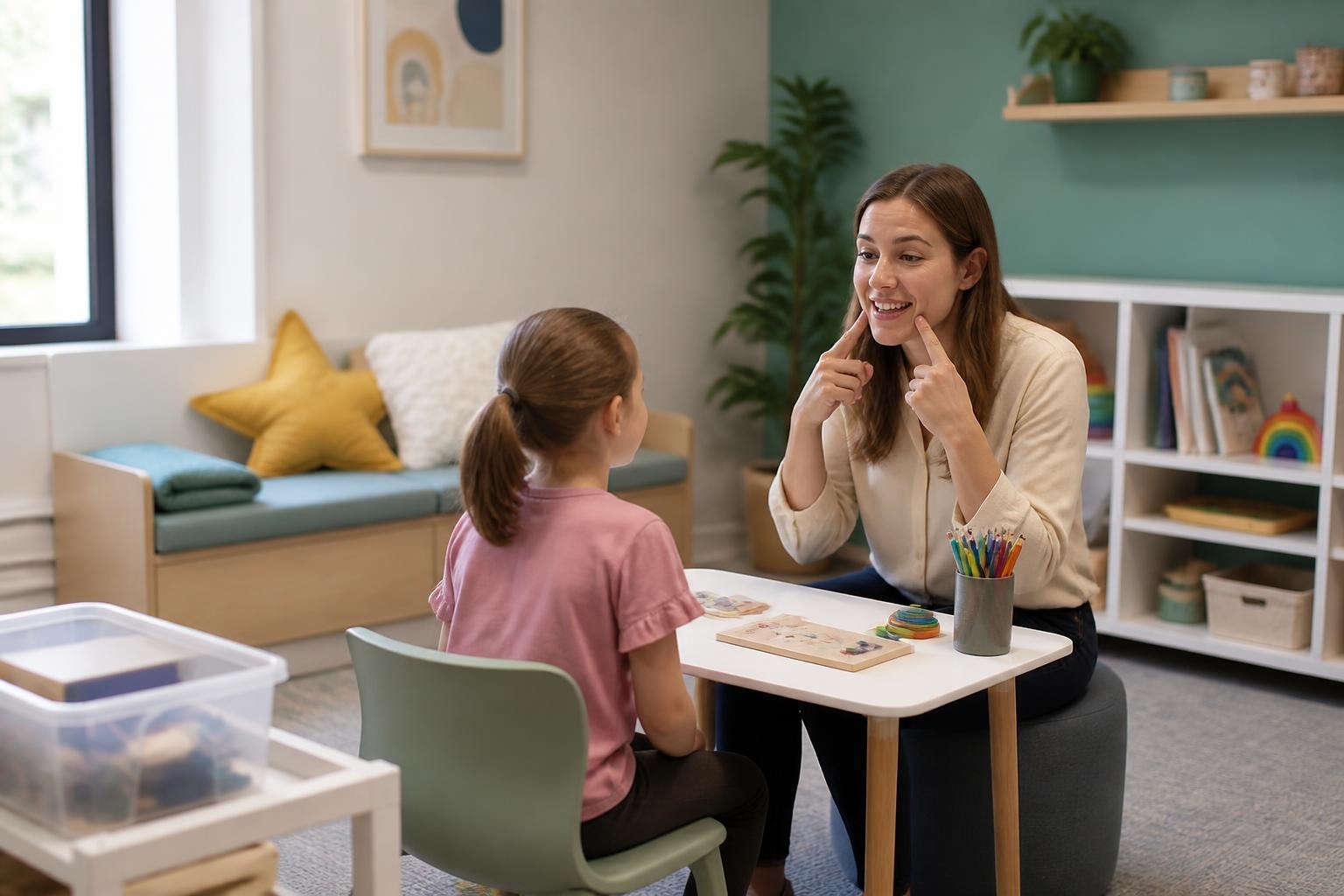
Walking into a therapy space should feel like stepping into a place of possibility, not anxiety. You know what? The environment where speech therapy happens matters just as much as the techniques therapists use. When you're working with children and adults facing communication challenges, the room itself becomes part of the healing process. That's why speech therapy room decor deserves thoughtful consideration, not just a quick trip to the dollar store for random posters.
Why Your Therapy Environment Matters More Than You Think
Have you ever noticed how you feel differently in various spaces? That's not coincidence. The therapeutic environment directly impacts client engagement, comfort levels, and overall treatment outcomes.
Research consistently shows that carefully designed spaces reduce anxiety and increase participation. When clients feel safe and welcomed, they're more likely to open up and engage fully in therapy activities. This is especially critical for individuals with developmental or neurological disabilities who may already experience sensory sensitivities.
Creating an effective therapeutic space through thoughtful speech therapy room decor involves balancing multiple factors:
- Visual stimulation without overwhelming the senses
- Organization that supports smooth session flow
- Flexibility to accommodate different age groups and needs
- Accessibility for various mobility levels
- Calmness that promotes focus and learning
The goal isn't to create an Instagram-worthy space. It's about designing an environment that genuinely supports your therapeutic objectives.
Choosing Colors and Textures That Support Therapy Goals
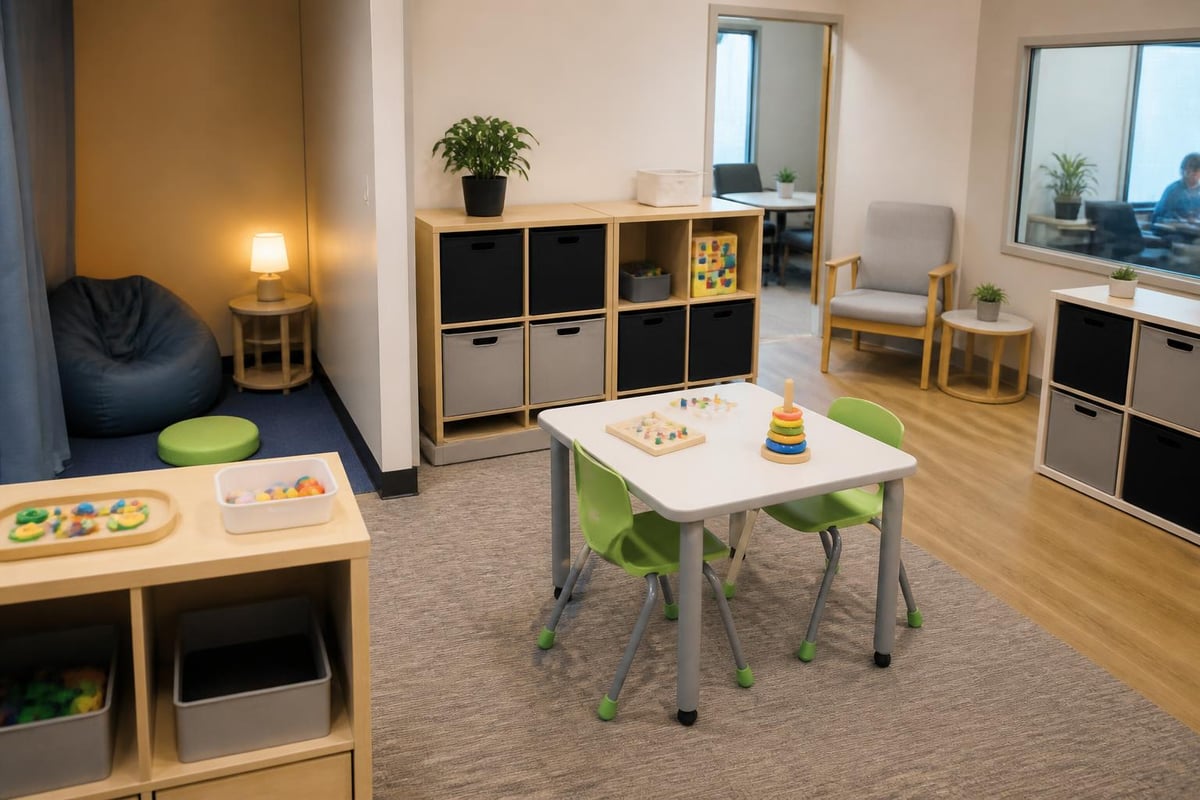
Color psychology isn't just marketing fluff. It's real, and it matters in therapeutic settings. When planning your speech therapy room decor, color choices should align with the emotional atmosphere you want to create.
Soft blues and greens promote calmness and focus. These colors work particularly well in spaces where you're addressing speech anxiety or working with clients who become easily overwhelmed. Warm neutrals create comfort without distraction, making them ideal base colors for walls and larger furniture pieces.
Want to add energy for certain activities? Strategic pops of brighter colors work better than painting entire walls in stimulating hues. Consider using calming colors as your foundation, then incorporate vibrant elements through changeable decor items.
Texture Considerations
Texture adds another dimension to your therapeutic space. Different textures provide sensory input that can help regulate clients during sessions:
- Soft fabric wall hangings reduce echo and create warmth
- Smooth, cleanable surfaces maintain hygiene standards
- Natural wood elements add grounding, organic comfort
- Varied seating textures accommodate sensory preferences
| Texture Type | Therapeutic Benefit | Best Use |
|---|---|---|
| Soft fabrics | Calming, sound-dampening | Wall panels, cushions |
| Smooth plastics | Easy cleaning, durability | Storage, tables |
| Natural wood | Grounding, warmth | Shelving, accent pieces |
| Rubber/foam | Safety, flexibility | Floor mats, seating |
Interactive Elements That Boost Engagement
Static decoration looks pretty, but interactive elements transform your space into an active learning environment. Interactive speech therapy room decor creates opportunities for spontaneous teaching moments throughout sessions.
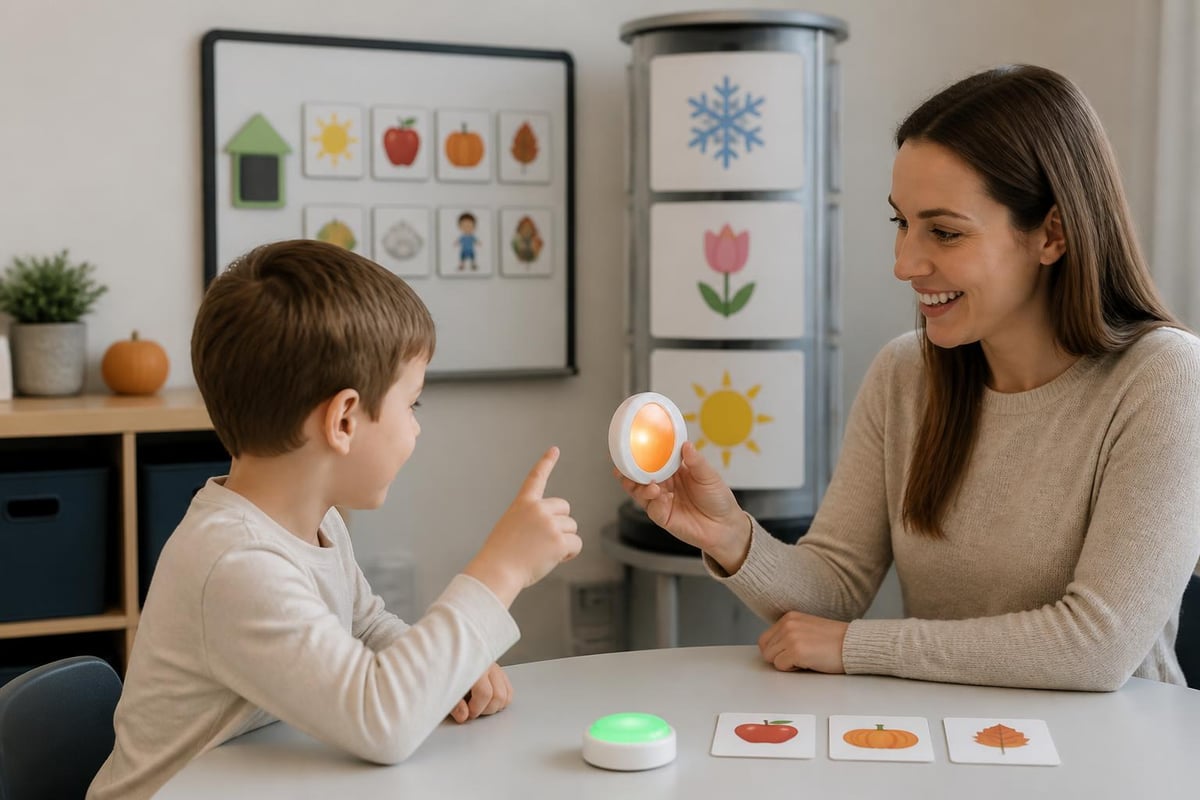
Think about incorporating tap lights that clients can activate when they produce target sounds correctly. These provide immediate positive reinforcement while adding a playful element to practice. Magnetic boards allow you to quickly change visual supports based on each client's needs.
Rotating seasonal themes keep your space fresh without requiring complete overhauls. Spring-themed decor elements can highlight new vocabulary and concepts while maintaining visual interest. Just remember: themes should enhance therapy, not distract from it.
Organization Systems That Work for Therapists
Beautiful speech therapy room decor loses its impact when you're frantically searching for materials mid-session. Your organization system needs to support efficient therapy delivery while maintaining visual appeal.
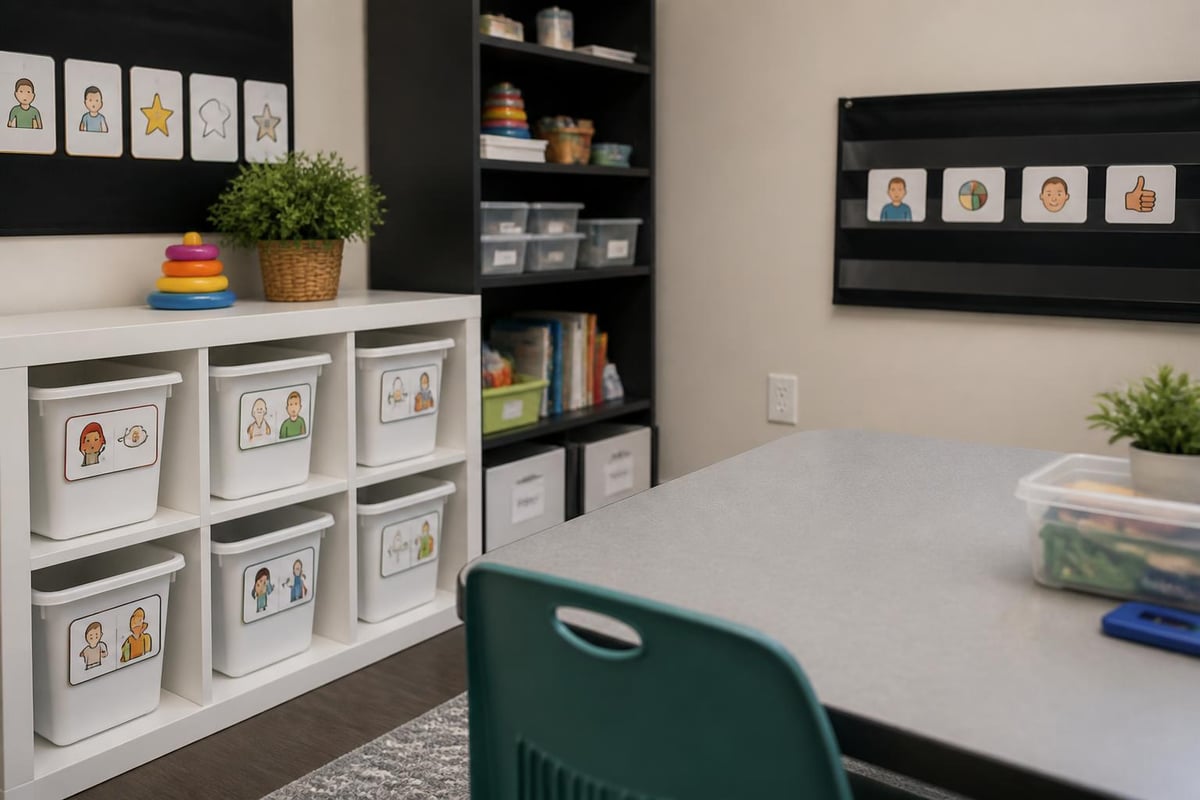
Clear, labeled containers serve dual purposes. They keep materials accessible for you while providing visual structure that helps clients understand session flow. Many clients benefit from seeing what activities are coming next, reducing anxiety about the unknown.
Essential organization zones include:
- Assessment materials (secured but accessible)
- Age-specific activity bins (clearly marked)
- Sensory regulation tools (immediately available)
- Visual supports and communication aids (at client eye level)
- Parent resources (in a designated take-home area)
Consider the sight lines in your room. Can parents observe comfortably without being intrusive? Can you maintain visual contact with clients while accessing materials? These practical considerations impact therapy effectiveness more than any decorative choice.
Creating Flexible Spaces
Your room needs to adapt quickly between clients with different needs. Floor cushions, folding tables, and movable storage units allow you to reconfigure your space throughout the day. A preschooler needs different spatial arrangements than a teenager working on social communication.
Think vertically too. Wall-mounted systems maximize floor space while keeping materials visible and organized. This is particularly valuable in smaller therapy rooms where every square foot counts.
Sensory-Friendly Considerations
Many clients receiving speech therapy services also experience sensory processing differences. Your speech therapy room decor choices should acknowledge and accommodate these needs without assuming every client requires the same environmental modifications.
Adjustable lighting gives you control over visual input. Dimmer switches allow you to reduce fluorescent harshness when working with light-sensitive clients. Natural light is ideal when available, but make sure you can control it with blinds or curtains.
Sound management matters tremendously in speech therapy spaces. Fabric elements absorb echo, making it easier for clients to process auditory information. White noise machines can mask distracting hallway sounds without overwhelming the space.
Avoid visual clutter on walls. Yes, this seems to contradict advice about interactive elements, but there's a balance. Every item in your space should serve a purpose. If it's not currently supporting therapy goals, store it away until needed.
Making Your Space Welcoming for All Ages
Speech therapy serves clients from toddlers to older adults. Can your speech therapy room decor accommodate this range without feeling either childish or sterile?
Neutral base design with changeable accent pieces works best. Keep walls and major furniture pieces age-neutral, then adapt with portable elements. A sophisticated space can become child-friendly with the addition of specific activity materials without permanent kiddie themes.
Consider multi-generational appeal in your choice of seating. A quality chair serves both a five-year-old and a fifty-year-old, while a tiny plastic seat definitely doesn't. Adjustable-height tables and varied seating options provide flexibility across your caseload.
Creating an effective therapeutic environment through speech therapy room decor combines aesthetics with functionality, always keeping client needs at the center. The right space reduces barriers to communication progress and makes every session more effective. At Hansel Union Consulting, PLLC, we understand how environmental factors impact therapeutic outcomes across all our comprehensive services, from speech therapy to behavioral and occupational therapy. If you're ready to support your loved one's communication development in a thoughtfully designed therapeutic environment, reach out to our team serving Hampton Roads and Virginia today.