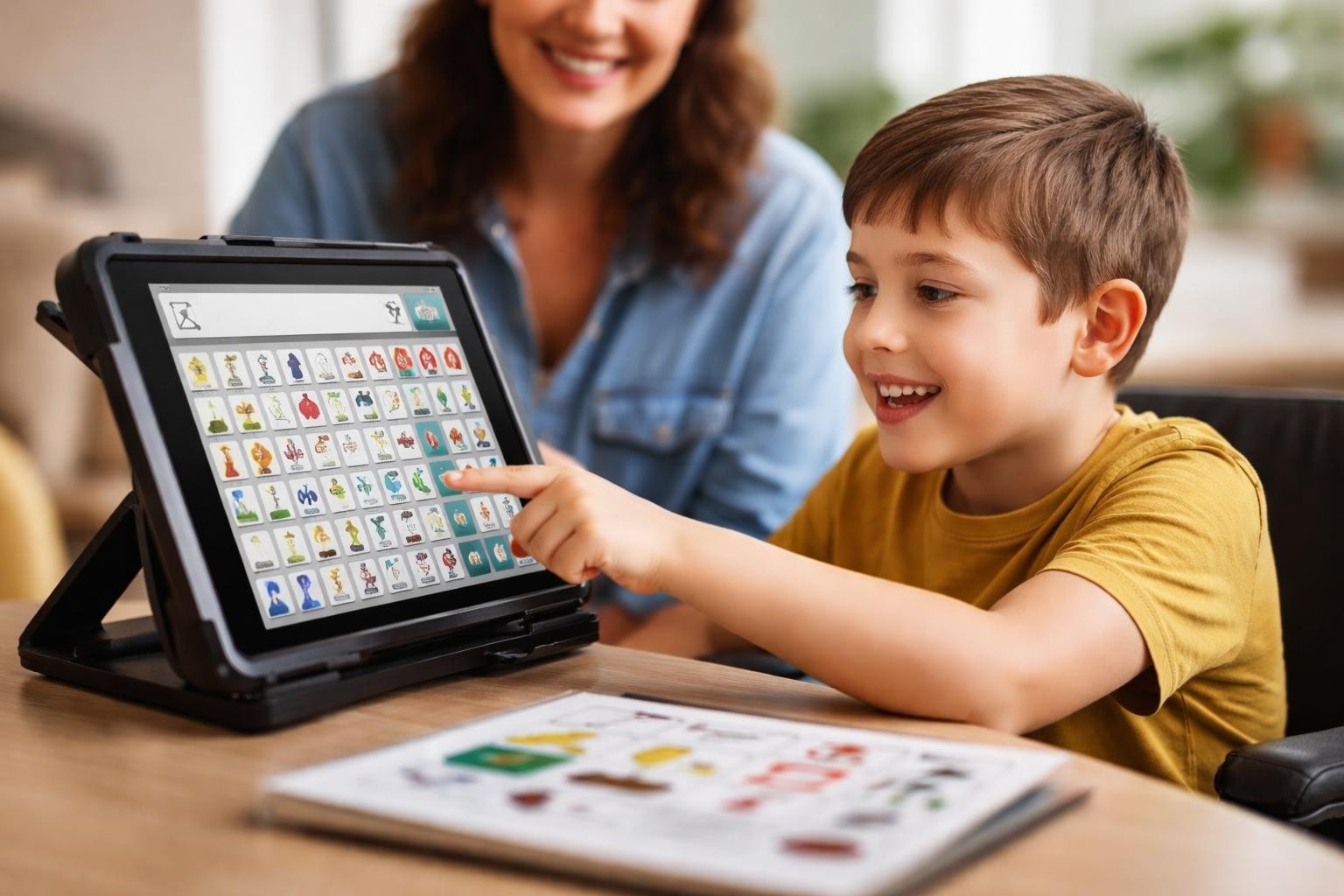
Have you ever wondered how individuals who struggle with verbal communication can express their thoughts, needs, and feelings? The world of augmentative and alternative communication has evolved dramatically, offering a wide range of solutions that transform lives every day. Whether you're a parent, therapist, educator, or caregiver, understanding the various types of speech communication devices available today can help you make informed decisions for those you support. Let's explore the options that are making a real difference in therapeutic settings across Virginia and beyond.
Understanding AAC Technology Categories
When we talk about types of speech communication devices, we're really discussing a spectrum of tools designed to help people communicate more effectively. The American Speech-Language-Hearing Association provides comprehensive guidance on how these systems work and who can benefit from them.
Think of AAC devices as existing on a continuum. On one end, you have simple, no-tech solutions like gestures and facial expressions. On the other end, you'll find sophisticated electronic devices with synthesized speech output. Most individuals using AAC actually benefit from a combination of different device types throughout their day.
Unaided vs. Aided Communication Systems
Here's something important to understand: not all communication devices are physical objects you can hold. Unaided AAC methods rely solely on the user's body and include:
- Sign language and manual signs
- Gestures and body language
- Facial expressions
- Vocalizations and approximations
Aided systems, however, require some type of external tool or device. These range from simple picture boards to complex computer systems with eye-tracking capabilities.
Low-Tech Speech Communication Options
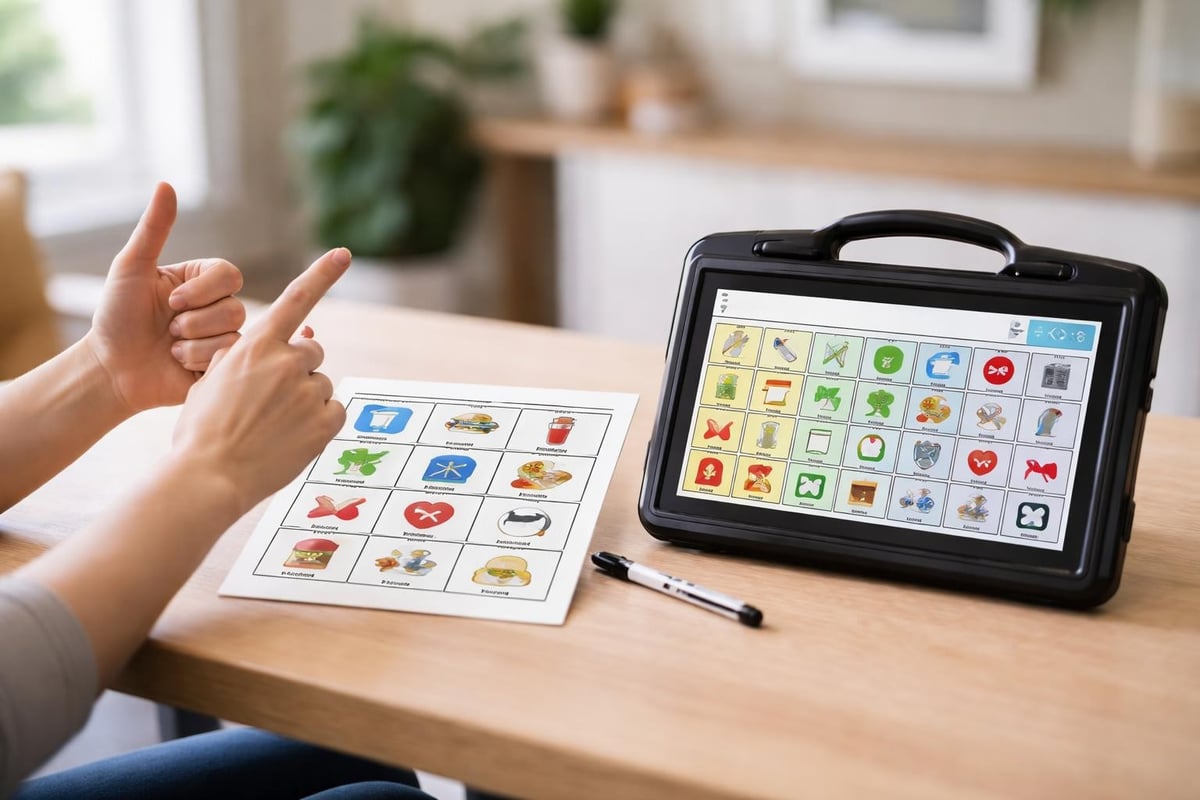
Let's start with the basics. Low-tech types of speech communication devices don't require batteries or electricity, making them incredibly reliable and accessible. These tools are often the first step in an AAC journey.
Picture Exchange Communication System (PECS) has been helping individuals communicate since the 1980s. Users select pictures representing what they want to say and hand them to a communication partner. It's straightforward, portable, and surprisingly effective.
Communication boards and books fall into this category too. These can be customized with photographs, symbols, or words arranged by category. The University of Texas Assistive Technology Lab highlights how these low-tech solutions remain valuable even as technology advances.
| Low-Tech Device | Best For | Key Advantage |
|---|---|---|
| PECS Books | Early communicators | Teaches cause-and-effect |
| Communication Boards | Limited vocabulary needs | No learning curve |
| Eye Gaze Frames | Physical limitations | No motor skills required |
| Choice Cards | Quick decisions | Highly portable |
Mid-Tech Communication Solutions
Mid-tech devices bridge the gap between simple boards and complex computers. These types of speech communication devices typically use batteries and may have basic electronic features, but they're still relatively simple to operate.
Single-message voice output devices let users record and play back one message at a time. Press a button, and it speaks. These work wonderfully for specific, repeated communications like "I need help" or "More, please."
Sequential message communicators take things a step further. Texas Assistive Technology Network describes how these devices can store multiple messages in a specific order, perfect for following routines or telling stories.
Some popular mid-tech options include:
- BIGmack switches for single messages
- Step-by-Step communicators for multi-step sequences
- GoTalk devices with multiple message locations
- Talking photo albums adapted for communication
High-Tech Speech Generating Devices
Now we're getting into the sophisticated world of speech-generating devices (SGDs). These are the types of speech communication devices that truly revolutionize communication for many individuals with complex needs.
Modern SGDs use dynamic display technology, meaning the screen changes based on what the user selects. Touch "food," and suddenly you see dozens of food options. Select "pizza," and you might see toppings to choose from. This layered approach allows for thousands of vocabulary words in a compact device.
Features of Modern SGDs
What makes today's high-tech devices so powerful? The technology has exploded in capability since 2020.
Text-to-speech synthesis has become remarkably natural-sounding. Users can type messages that are spoken aloud in customizable voices, including different ages, genders, and accents. Some devices even let you bank your own voice before it's lost to illness.
Eye-tracking technology helps individuals with severe physical limitations. The device tracks where you're looking on the screen and selects items based on your gaze. It's like magic watching someone compose sentences just by looking at words.
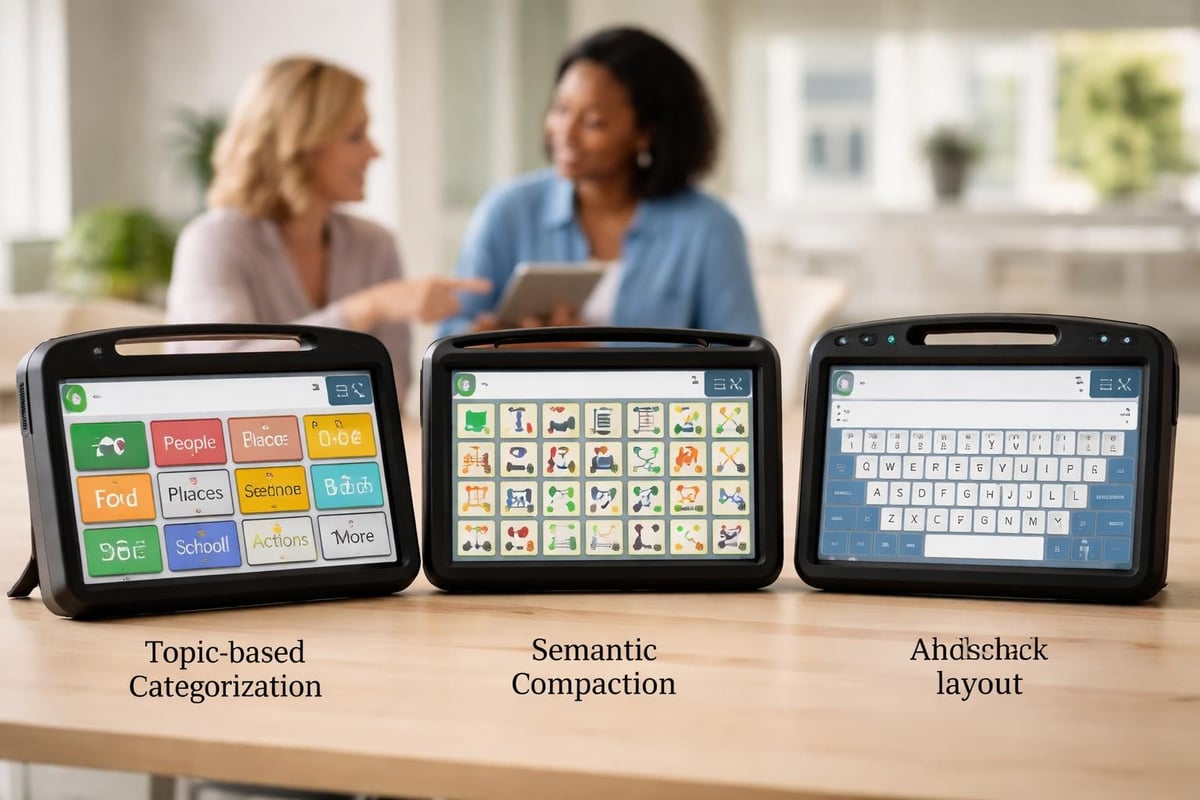
Symbol-based systems like Proloquo2Go, TouchChat, and LAMP Words for Life offer different organizational approaches. Some use semantic compaction, others categorize by topic. Finding the right fit matters tremendously.
| Device Type | Vocabulary Capacity | Access Method | Typical Users |
|---|---|---|---|
| Dedicated SGDs | 10,000+ words | Touch, switch, eye gaze | All ages, various disabilities |
| Tablet-based apps | Unlimited | Touch, partner assist | Moderate to high literacy |
| Hybrid devices | 5,000-15,000 words | Multi-modal | Growing communicators |
Tablet and Smartphone Applications
Here's where things get really interesting for families. Your iPad or Android tablet can become one of the most versatile types of speech communication devices available. Nationwide Children’s Hospital emphasizes how app-based AAC has democratized access to communication technology.
Apps like Proloquo2Go, TouchChat HD, and Speak for Yourself turn consumer tablets into powerful communication tools at a fraction of traditional SGD costs. In 2026, we're seeing even more integration with artificial intelligence to predict word choices and learn user patterns.
Advantages of app-based solutions:
- Lower initial cost compared to dedicated devices
- Regular updates with new features
- Familiar interface many users already know
- Easy backup and sharing across devices
- Access to other tablet functions when appropriate
But there are trade-offs. Tablets aren't as durable as dedicated devices. They're also more tempting for non-communication activities, which can be distracting for some users.
Considerations for Device Selection
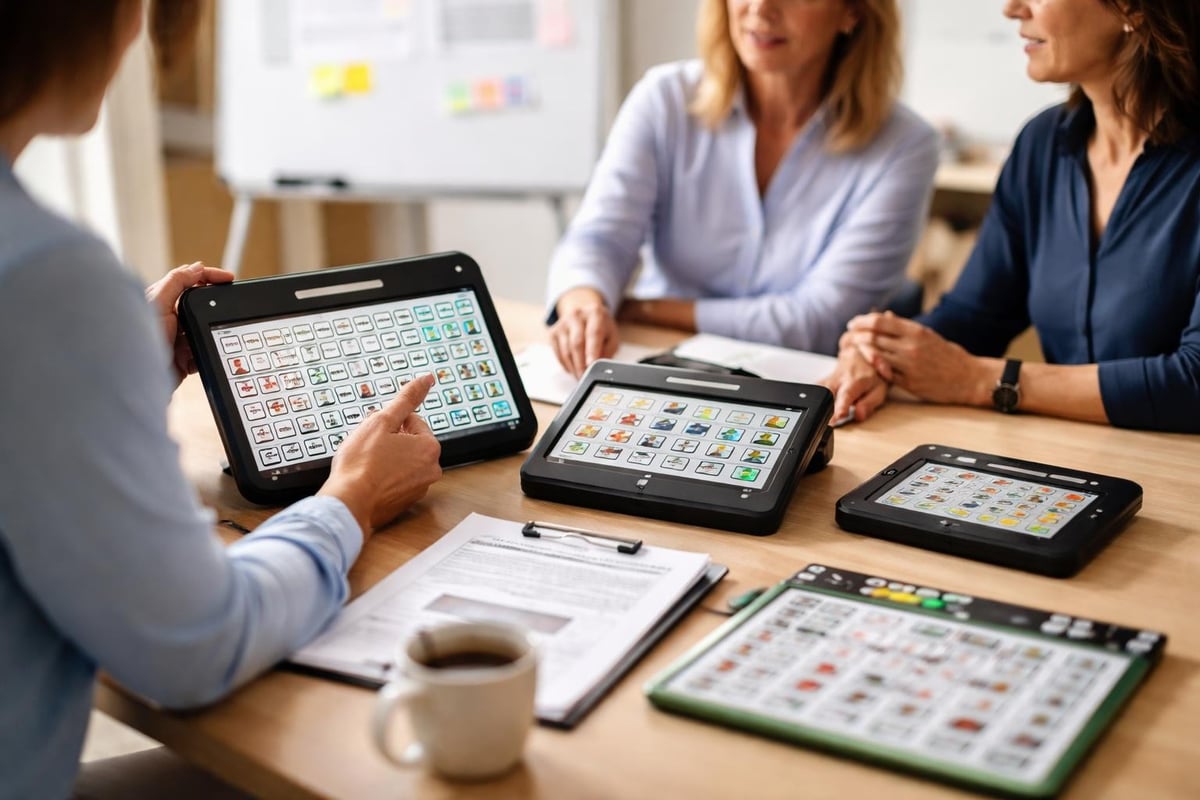
Choosing among the various types of speech communication devices isn't a one-size-fits-all decision. You need to consider the individual's current abilities, future potential, and specific environments where they'll communicate.
Motor skills matter significantly. Can the person physically touch a screen with accuracy? Do they need switch access or eye gaze? Would voice output help or distract?
Cognitive abilities guide vocabulary organization. Some individuals thrive with category-based systems, while others need a more intuitive motor-planning approach.
Students in special education settings have specific rights to access AAC at no cost when it's needed for educational progress. This makes thorough assessment and proper device selection even more critical.
Environmental Factors to Evaluate
Where will the device be used most? A classroom has different demands than a home or therapy session. Consider:
- Noise levels and need for volume adjustment
- Durability requirements for different settings
- Size and portability needs
- Battery life for all-day use
- Weather resistance for outdoor activities
The Role of Professional Assessment
You shouldn't navigate these choices alone. Speech-language pathologists with AAC specialization can conduct comprehensive evaluations to identify the most appropriate types of speech communication devices for each individual. Missouri Assistive Technology resources can help you understand what's available in your region.
Professional assessment typically includes trials with different device types, evaluation of the individual's sensory and motor abilities, and consideration of the communication partner's skills and comfort level. Many of our clients at Hansel Union Consulting have found that the assessment process itself reveals capabilities they didn't know existed.
The therapist will also consider funding sources. Insurance, school districts, and state programs may cover devices differently. Dedicated SGDs often have better insurance coverage than tablets, even when the tablet app costs less overall.
Training and Implementation Support
Getting the device is just the beginning. Successful use of any types of speech communication devices requires training for the user, family members, teachers, and other communication partners. Without proper training, even the most advanced device sits unused.
Implementation typically follows these steps:
- Initial device programming with core vocabulary
- User training on basic operations
- Communication partner training
- Environmental setup and access arrangement
- Ongoing vocabulary expansion
- Regular assessment and adjustment
Real success stories come from consistent use across all environments. When everyone in a person's life supports and encourages AAC use, communication flourishes. The testimonials from our families consistently highlight how comprehensive support makes the difference between a device that transforms life and one that gathers dust.
Understanding the various types of speech communication devices available in 2026 empowers you to advocate effectively for the communicators in your life. From simple picture boards to AI-enhanced speech generators, the right tool can unlock a world of expression and connection. If you're supporting someone with communication challenges in Hampton Roads or across Virginia, Hansel Union Consulting, PLLC offers comprehensive speech therapy services to assess needs, recommend appropriate AAC solutions, and provide the ongoing support that turns technology into meaningful communication.